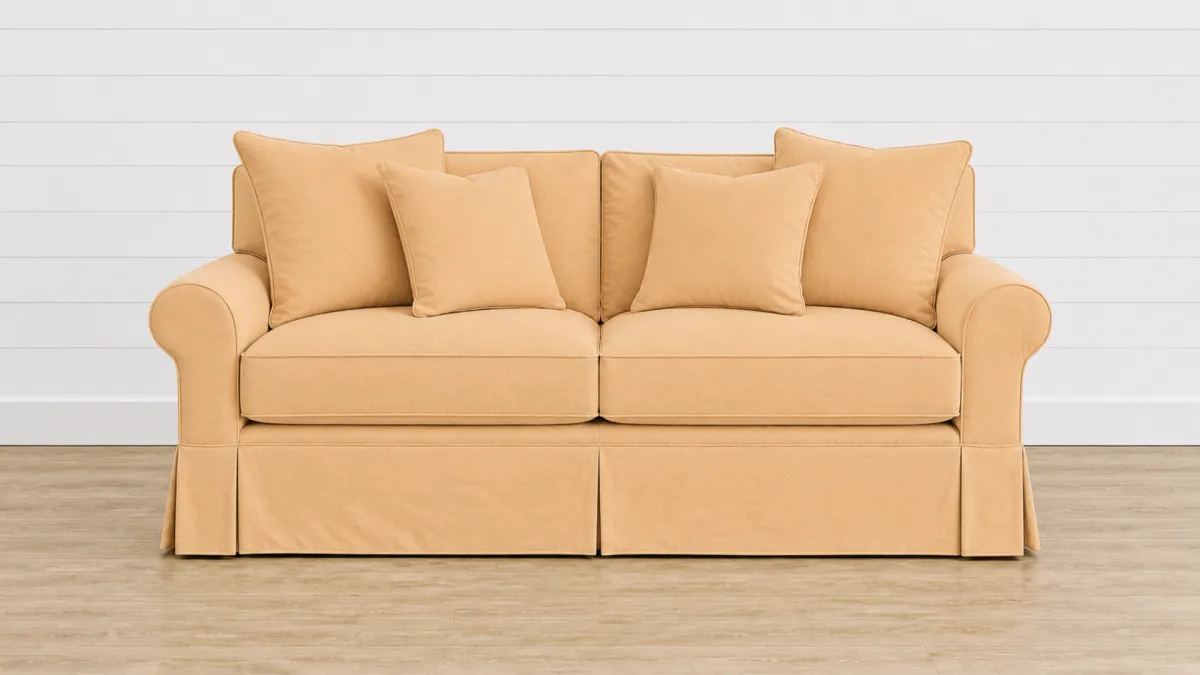
How Much Should a Quality Sofa Cost? What the Sticker Price Leaves Out
Two sofas can carry very different price tags and be almost impossible to compare honestly.
One is $2,200. One is $3,500. The photographs look similar. Both say they are American-made. Both offer custom fabric. Is the more expensive one better, or just more expensive?
Most furniture shopping experiences never answer that, because most furniture shopping is really discount shopping. Thirty percent off an unknown number isn't information.
Here's how to compare the actual furniture.
1. The frame
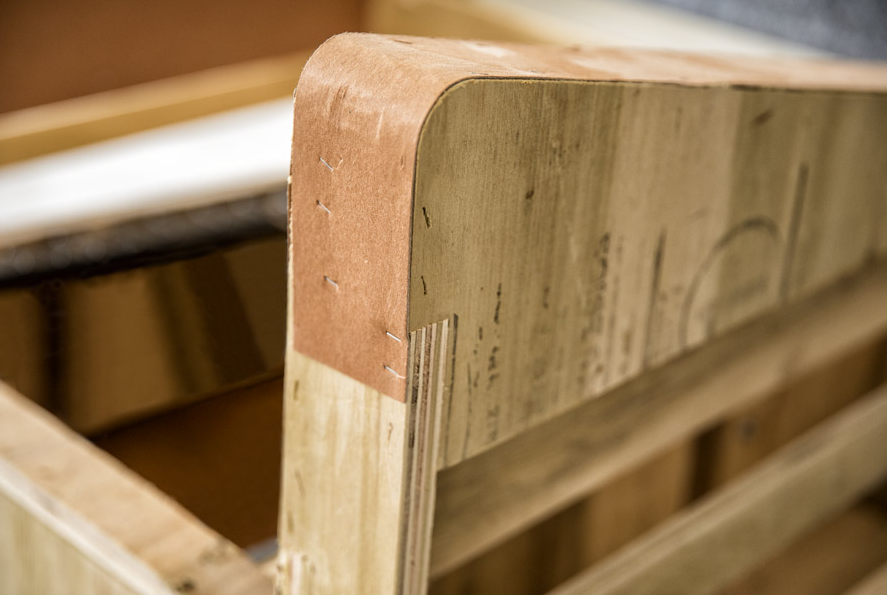
This is the part that determines whether the sofa exists in fifteen years.
What you want to know: what the frame is made of, how it's joined, and whether it's warranted.
Kiln-dried hardwood and quality engineered wood are both legitimate. What separates good from poor is joinery and reinforcement — interlocked joints, corner blocks, glue and staples together rather than staples alone. Ours are 7/8" engineered all-wood with interlocked joints and corner blocks, warranted for life under normal, residential use.
If a company won't tell you what the frame is, that's your answer.
2. The suspension — and we're going to be honest about ours
The suspension is the system underneath the cushions that carries weight. There are essentially three approaches, and this is where a lot of price difference actually lives.
Sinuous springs — S-shaped wire clipped across the frame. Inexpensive, common, and what most furniture in the mid-market actually has. Serviceable. Not premium.
Eight-way hand-tied — coils tied by hand in eight directions. Traditional, labor-intensive, genuinely excellent, and expensive to produce. This is what many premium retailers use and it's a legitimate reason their furniture costs more. Considered an artisan craft used primarily in high-end, custom-built furniture making.
Engineered drop-in coil — a pre-assembled coil unit engineered for consistency and dropped into the frame. Also a premium approach, more consistent unit-to-unit than hand-tying, and less labor-intensive.
We use the engineered coil system. We're not going to tell you it's identical to eight-way hand-tied, because it isn't — they're different approaches with different characteristics, and a company claiming they're the same is hoping you won't ask a follow-up question.
What we'd tell you instead: the meaningful gap in furniture isn't between the two premium suspensions. It's between either of them and sinuous springs. So when you compare two sofas, don't ask whether it's hand-tied. Ask what the suspension actually is. That single question separates real furniture from the rest faster than anything else on this list.
3. Cushion construction
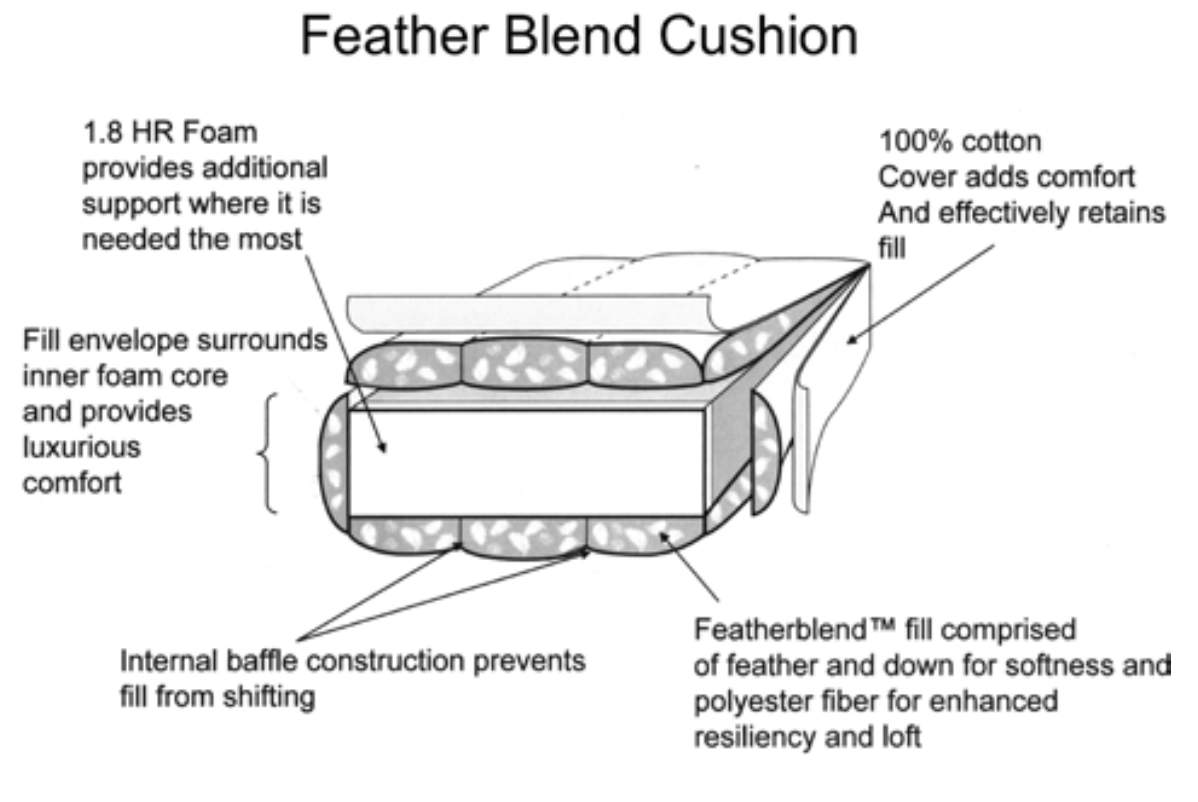
Cushions are where comfort lives and where corners get cut invisibly.
Ask what the core is, what wraps it, and what the density is. High-resiliency foam with a fiber or down wrap behaves very differently from a plain foam block, and it ages very differently too. A cushion that feels wonderful in a showroom and flattens in eighteen months is never a good cushion — it is a soft one.
Also ask whether cushions can be replaced separately later. On good furniture, they can.
4. Where it's made
Not because domestic manufacturing is automatically better, but because it tells you about the supply chain, the lead time and what happens if something goes wrong.
Furniture built to order in the United States generally takes longer — ours is approximately 8 to 12 weeks — because nothing is sitting in a container waiting for you. The trade you're making is time for specificity.
5. Fabric and customization
Two questions that reveal a great deal.
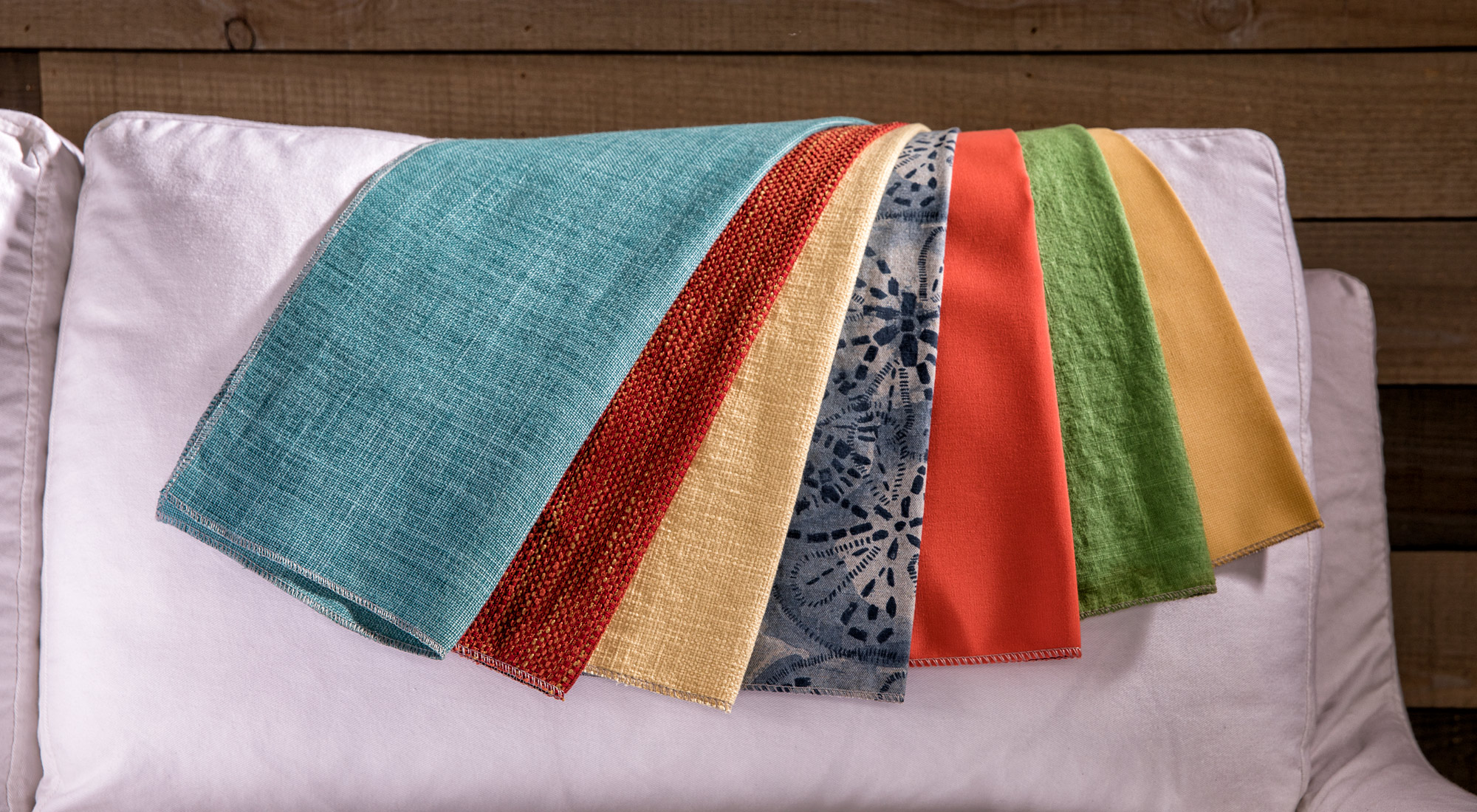
How many fabrics, and what happens if you want one that isn't standard? A company offering six colors has made a business decision that constrains you.
Does the price change by fabric grade? It almost always does, and comparing a base-fabric price at one company against a mid-grade price at another is not a comparison. Get both quotes in comparable grades or you're comparing nothing.
6. Whether replacement covers will exist in five years
Very few people ask this, and it may be the most consequential question on the list.
Fabric wears out. Taste changes. Rooms change. If the covering can be replaced, a good frame lasts as long as it was built to last. If it can't, the useful life of the furniture is the useful life of its fabric — which is a much shorter number.
Ask specifically: do you sell replacement covers, and for how long after a collection is discontinued?
We ask people to ask us that, because this company was started over that exact question. In 1997 my wife bought a slipcovered sofa from a well-known national retailer and loved it. Three years later, she called to order replacement covers and was told they could no longer be purchased at all. The frame was perfect. It had simply become disposable because of a decision made somewhere else.
We keep replacement covers available for current and most discontinued collections. That's the founding premise, not a feature we added.
7. The total delivered price
This is the number that actually leaves your account, and it's frequently very different from the number on the tag.
Add up all of it:
—The furniture, in the fabric grade you actually want
—Delivery — and find out whether that's white glove into the room you want it in, or a box on the porch
—Sales tax, which varies substantially by where you live
—Any membership or program fee required to get the advertised price
A sofa that looked $1,300 more expensive can end up $1,800 more once delivery, tax and a membership fee are included. It can also go the other way. The point isn't which brand wins — it's that the sticker price frequently isn't the comparison you think you're making.

So what should a quality sofa cost?
There isn't a single honest number, but there are useful boundaries.
Below roughly $1,200, you're generally looking at sinuous springs, lower-density foam, and furniture designed for a five-to-seven year life. That can be exactly right for a first apartment or a room that's about to change.
Between roughly $2,000 and $3,500, you should expect a serious frame, a premium suspension, quality cushions and real fabric choice. This is where furniture starts being a fifteen-year purchase.
Above that, you're often paying for one of three things: genuinely exceptional materials, hand-labor like eight-way hand-tying, or the retail infrastructure around the sale — showrooms, catalogs, and the experience of shopping there. All three are legitimate. They're just different things, and it's worth knowing which one you're buying.

Compare the furniture, not the discount
Take this list to any company you're considering, including us. If they can't answer these questions clearly, that itself is an answer.
If you'd like to know what a Nantuckit room costs before talking to anyone, the estimator will tell you in a few minutes.
Use the Free Estimator →
Common questions
Is eight-way hand-tied better than a coil unit? They're different premium approaches. Hand-tying is traditional and labor-intensive; engineered coil units are more consistent piece to piece. The larger quality gap is between either of these and sinuous springs.
Why does custom furniture take 8 to 12 weeks? Because it isn't built until you order it. Nothing is in a warehouse waiting.
Does a higher price always mean better quality? No. Price reflects materials, labor and the cost structure of the company selling it. Those are three different things and only two of them end up in your living room.
